
OWI Meaning: Full Definition, Origin, Examples & Legal Guide 2026
Nearly one in three road fatalities in the U.S. involves a driver under the influence. Understanding the OWI meaning — Operating While Intoxicated — can make all the difference between a minor inconvenience and a life-altering legal battle.
In this article, we’ll explore the full definition of OWI, its origins, and practical examples, along with a comprehensive legal guide for 2026. Whether you’re a concerned citizen or a driver looking to stay informed, this guide will equip you with the knowledge you need to navigate the complexities of OWI laws.
What Does OWI Meaning?
OWI stands for Operating While Intoxicated.
In simple words, OWI Meaning driving or operating a vehicle after drinking alcohol or using drugs that make you unsafe to drive.
It is a legal term used in some U.S. states.
Simple Definition
OWI = Driving while drunk or drug-impaired.
If a person drinks alcohol or takes drugs and then drives a car, truck, motorcycle, or even a boat in some places, they can be charged with OWI.
Clear OWI Meaning in Easy Words
Let’s break the words:
- Operating = controlling or driving a vehicle
- While = at the same time
- Intoxicated = affected by alcohol or drugs
So, Operating While Intoxicated means:
Being in control of a vehicle while alcohol or drugs affect your body and mind.
Even if the car is not moving, a person can still be charged in some states if they are sitting in the driver’s seat while drunk.
Where Is the Term OWI Used?
Not every place uses the term OWI.
Some U.S. states prefer OWI instead of DUI or DWI.
For example, the states of Indiana and Iowa commonly use the term OWI in their laws.
Other states use:
- DUI (Driving Under the Influence)
- DWI (Driving While Intoxicated or Driving While Impaired)
The meaning is similar, but the legal wording changes by state.
Origin and History of OWI
The idea of punishing drunk driving is not new.
Early History
In the early 1900s, cars became common. People started drinking and driving. This caused many accidents.
At first, there were no strong laws.
By the 1930s and 1940s, U.S. states began creating laws to stop drunk driving.
Why OWI Was Created
Some states chose the term Operating While Intoxicated instead of “Driving” because:
- “Operating” is a wider word than “driving.”
- It includes sitting in control of a vehicle.
- It may also include boats or other motor vehicles.
This made the law stronger and clearer.
What Counts as Intoxicated?
A person is usually considered intoxicated when:
- Their Blood Alcohol Concentration (BAC) is 0.08% or higher (in most U.S. states).
- Drugs affect their ability to drive safely.
- Police observe unsafe driving behavior.
What Is BAC?
BAC means Blood Alcohol Concentration.
It measures how much alcohol is in your blood.
Example:
If your BAC is 0.08%, it means 0.08% of your blood is alcohol.
Higher BAC = More danger.
Real-Life Examples of OWI
Let’s look at simple examples.
Example 1: After a Party
Ali drinks four beers at a party.
He feels dizzy but says, “I’m fine.”
He drives home.
Police stop him for swerving.
His BAC is 0.10%.
He is charged with OWI.
Explanation: His alcohol level was above the legal limit, so he was intoxicated while driving.
Example 2: Sitting in the Car
Sara drinks wine at a restaurant.
She sits in her parked car with the engine running.
Police find her asleep in the driver’s seat.
In some states, she can be charged with OWI.
Explanation: Even though she was not moving, she was operating the vehicle.
Example 3: Drug-Impaired Driving
John takes illegal drugs before driving.
He drives slowly and hits a sign.
Police test him and confirm drug use.
He is charged with OWI.
Explanation: Drugs can cause intoxication, not just alcohol.
Short Dialogues for Better Understanding
Dialogue 1: Traffic Stop
Police Officer: “Have you been drinking tonight?”
Driver: “Just two drinks.”
Officer: “Please step out of the car.”
After testing, the driver is over the limit.
Explanation: Even small amounts of alcohol can lead to an OWI charge if over the legal limit.
Dialogue 2: Friends Talking
Friend 1: “You look drunk. Don’t drive.”
Friend 2: “I’ll be fine.”
Friend 1: “No. You could get an OWI.”
Explanation: Friends often warn others because OWI has serious consequences.
Don’t Miss: 120+ Biology Words that start with y
OWI vs DUI vs DWI
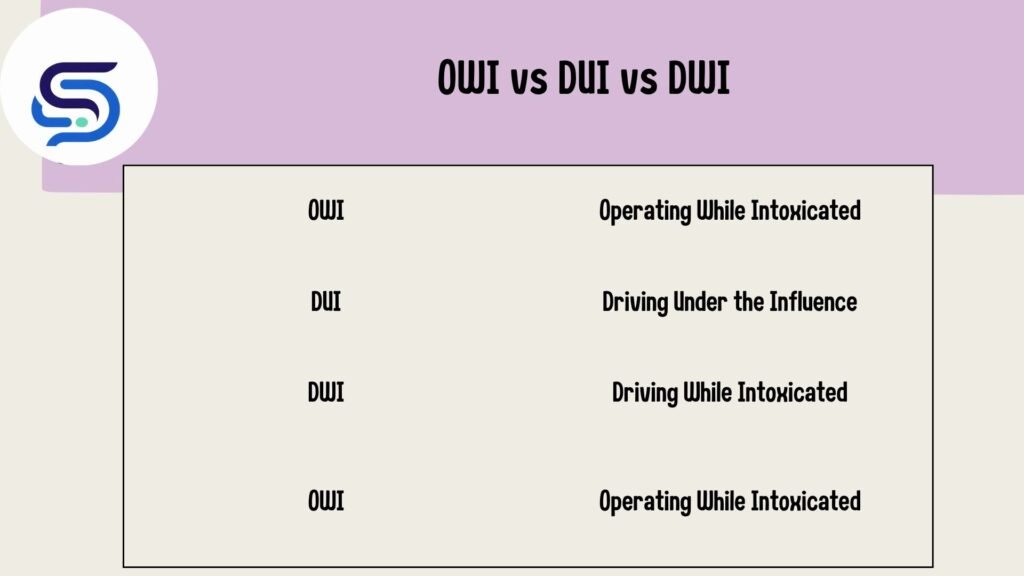
Many people get confused.
Here is a simple comparison:
| Term | Full Form | Meaning | Used In |
| OWI | Operating While Intoxicated | Operating a vehicle while drunk or drug-impaired | Some U.S. states |
| DUI | Driving Under the Influence | Driving under influence of alcohol or drugs | Many U.S. states |
| DWI | Driving While Intoxicated | Driving while drunk or impaired | Some states |
Are They the Same?
They are very similar.
The difference depends on state law.
In most cases:
- OWI = DUI = DWI (same idea, different wording)
Legal Consequences of OWI
OWI is a serious crime.
Possible Penalties
- Fines (money penalty)
- License suspension
- Jail time
- Community service
- Mandatory alcohol education classes
- Higher insurance rates
The punishment depends on:
- First offense or repeat offense
- BAC level
- If someone was injured
- If a child were in the car
Personality Traits and Usage Context
Let’s talk about behavior.
What Type of Person Gets an OWI?
There is no single type. But common traits include:
- Risk-taking behavior
- Overconfidence (“I’m fine to drive”)
- Peer pressure
- Lack of planning
- Poor judgment
Usage Context
The word OWI is mainly used in:
- Legal documents
- Police reports
- News articles
- Court cases
People do not use OWI in casual daily conversation as much as DUI.
Example:
News headline: “Driver Arrested for OWI After Crash.”
Modern Context (Updated for 2026)
In 2026, OWI laws are stricter than before.
New Trends
- More roadside drug testing
- Stronger penalties for repeat offenders
- Ignition interlock devices required (car will not start if alcohol is detected)
- Zero tolerance for underage drivers
Social Media Awareness
Many campaigns now spread awareness about drunk driving dangers.
Ride-sharing apps have reduced drunk driving cases in many cities.
Example:
After a concert, people use ride apps instead of driving drunk.
Explanation: Technology helps reduce OWI cases.
Common Mistakes About OWI
Many people believe wrong information.
Mistake 1: “I Was Not Driving.”
Wrong.
If you are in control of the car, you may still be charged.
Mistake 2: “Coffee Makes Me Sober”
Wrong.
Coffee does not lower BAC. Only time reduces alcohol levels.
Mistake 3: “Only Alcohol Counts”
Wrong.
Drugs (legal or illegal) can also lead to OWI.
Mistake 4: “First Offense Is Not Serious”
Wrong.
Even first offenses can lead to heavy fines and license suspension.
Read Next: NGL Meaning in Text
Signs of Intoxicated Driving
Police may stop a driver for:
- Swerving
- Driving too slowly
- Sudden braking
- Ignoring traffic signals
- Driving at night without headlights
Explanation: These behaviors suggest impairment.
How to Avoid an OWI
Simple steps:
- Do not drink and drive.
- Use a taxi or ride app.
- Have a designated driver.
- Stay overnight if needed.
- Plan before drinking.
Explanation: Planning ahead prevents legal trouble.
Social and Emotional Impact
OWI affects more than just the driver.
It can:
- Hurt family relationships
- Damage reputation
- Cause job loss
- Lead to guilt if accidents happen
Example:
A parent loses their license and cannot take children to school.
Explanation: OWI impacts daily life.
OWI and Underage Drivers
In many states:
- Under 21 = lower BAC limit (often 0.02%)
- Zero tolerance policy
Even small amounts of alcohol can cause arrest.
Explanation: Laws are stricter for minors.
Media and News Usage
You often see headlines like:
“Man Arrested for OWI After Highway Crash”
In news language, OWI sounds formal and legal.
It signals a criminal charge.
Is OWI a Felony or Misdemeanor?
It depends.
- First offense = usually misdemeanor
- Repeat offense or injury case = can become a felony
Felony means a more serious punishment.
Read More: FWD Meaning in Text
Conclusion
Understanding the meaning of OWI is crucial for anyone navigating the complexities of traffic laws and alcohol-related offenses. As we’ve explored, OWI laws vary significantly by state, underscoring the importance of being informed about your local regulations.
The origins and development of these laws highlight a broader societal commitment to road safety and responsible drinking. Examples and potential legal consequences further illustrate the serious implications of OWI charges. As you move forward, stay vigilant and informed about OWI laws to ensure both your safety and compliance.
FAQs
What does OWI stand for?
OWI stands for “Operating While Intoxicated,” which refers to driving a vehicle under the influence of alcohol or drugs.
How is OWI different from DUI?
While both terms relate to impaired driving, OWI is often used in some states, whereas DUI (Driving Under the Influence) is a more commonly used term. The definitions and implications can vary by state.
What are the legal consequences of an OWI charge?
Consequences can include fines, license suspension, mandatory alcohol education programs, and even jail time, depending on prior offenses and state laws.
What is the legal limit for blood alcohol content (BAC)?
In most states, a BAC of 0.08% is the legal limit for drivers over 21 years old. However, lower limits apply to commercial drivers and individuals under 21.
How can I defend against an OWI charge?
Common defenses include challenging the validity of the traffic stop, questioning the accuracy of breathalyzer tests, or proving that you were not impaired while driving.