Long in The Tooth Meaning, Origin, and Examples 2026
Certain phrases can reveal societal attitudes toward aging. One such phrase, “long in the tooth,” is rich with meaning and history. Unpacking the “long in the tooth meaning” not only aids in understanding language but also sheds light on how we view growing older.
This article will guide you through its intriguing origin, provide helpful examples, and equip you with the insights needed to incorporate this expression into your everyday dialogue.
What Does “Long in The Tooth Meaning?
“Long in the tooth” is an idiomatic expression that means someone or something is getting old or showing signs of age.
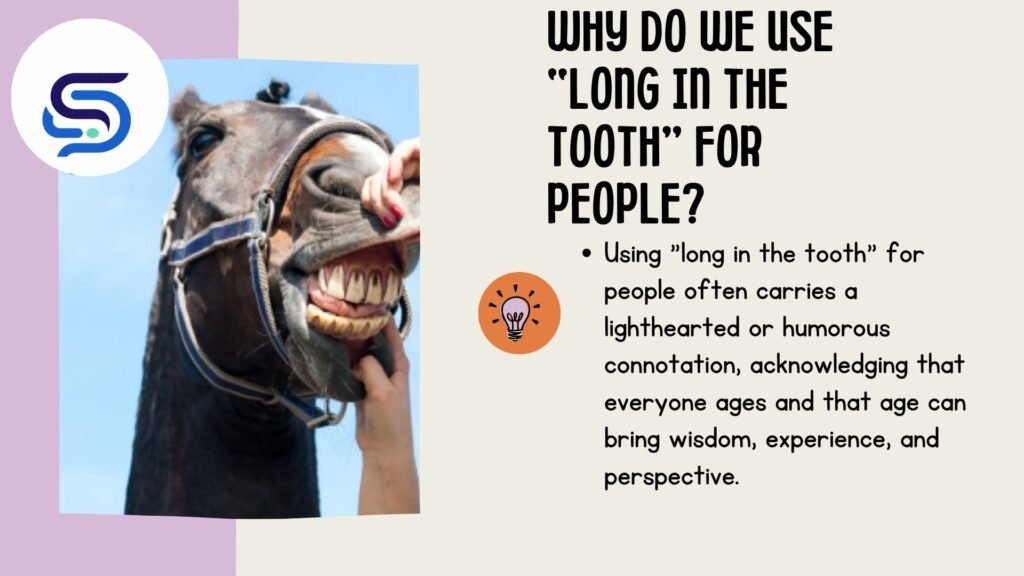
The phrase originates from horse racing: horses are aged by their teeth, and as they age, their gums recede, making their teeth appear longer. Thus, the saying metaphorically equates age with physical attributes that become more pronounced over time.
Today, it’s often used in a lighthearted or humorous context to describe people, organizations, or even technologies that might be considered outdated or past their prime.
Where Did the Phrase “Long in the Tooth” Come From?
The phrase “long in the tooth” originated from the realm of horse breeding, where the age of a horse can be gauged by its teeth. As horses grow older, their gums recede, and their teeth appear longer, making this a practical way to assess age.
Over time, this expression transitioned into a colloquial idiom used to describe someone who is aging or becoming less effective in a particular role, not just related to horses.
The use of the phrase in a broader context likely gained popularity in the 19th century, appearing in various forms in literature and conversation. Today, while it retains its original meaning tethered to age.
Why Do We Use “Long in the Tooth” for People?
Using “long in the tooth” for people often carries a lighthearted or humorous connotation, acknowledging that everyone ages and that age can bring wisdom, experience, and perspective.
It can also hint at being past one’s prime, reflecting societal attitudes toward aging. In essence, the phrase serves as a reminder of our shared human experience with aging, while also poking fun at the inevitability of growing older.
How Is “Long in the Tooth” Used Today?
Today, it’s commonly used to refer to people, often in a lighthearted or humorous manner, suggesting they may be past their prime.
In modern contexts, you might hear it in discussions about career longevity, relationships, or even technology. For instance, someone might say, “That laptop is getting a bit long in the tooth,” implying that it’s outdated.
Overall, while the phrase can carry a playful tone, it also serves as a reminder of the passage of time, whether concerning people, practices, or products.
For Example:
- “I believe that band has been around for a little too long in the tooth. Maybe it’s time they retire.”
- “The ol’ car’s a little long in the tooth, but it still runs like a charm.”
- “He’s getting long in the tooth, but he still does marathons.”
My Personal Experience with the Phrase “Long in the Tooth”
The phrase “long in the tooth” is often used to describe someone who is aging or past their prime. My personal experience with it came during a conversation with my grandfather, who always had a knack for using colorful idioms.
He employed this phrase humorously when talking about himself, acknowledging his years but also embracing the wisdom and stories that came with them. It was a gentle reminder that while age has its challenges, it also brings a wealth of experience.
Don’t Miss: Science Words That Start With B
Is “Long in the Tooth” Negative?
It’s essential to remember that aging can also carry positive aspects, such as wisdom and experience. Therefore, while “long in the tooth” can be perceived negatively when used in certain situations, the phrase can also reflect a simple acknowledgment of life’s natural progression.
Its interpretation hinges on the intent behind its use and the circumstances surrounding the discussion.
Interesting Fact About “Long in the Tooth”
The phrase “long in the tooth” originates from the aging process in horses, where the length of their teeth serves as an indicator of their age. As horses grow older, their gums recede, causing their teeth to appear longer.
This natural progression has led to the term being adopted to describe not just horses, but people and things that show signs of age or wear. Interestingly, this linguistic transition highlights the profound connection humans have with horses throughout history, as they have been essential companions in agriculture, transportation, and warfare.
Beyond its equine roots, “long in the tooth” has evolved to encompass various life contexts, from technology to personal relationships. For instance, we often use it to describe outdated gadgets or fashions that no longer resonate with the times.
Synonyms of Long in the Tooth Meaning
| Synonym | Usage and Nuance |
| Getting on in years | Polite and neutral, often used in formal or respectful contexts |
| Ageing | Descriptive and neutral, commonly used in academic or factual writing |
| Elderly | Formal term referring to advanced age, but less evaluative |
| Over the hill | Informal and often humorous or critical |
| Past one’s prime | Suggests decline from a previous peak of ability |
| Advanced in age | Formal and respectful, suitable for academic contexts |
| Old-fashioned | Used metaphorically for ideas or practices that feel outdated |
| Outdated | Commonly applied to technology, systems, or methods |
| No longer young | Mild and indirect, avoids negative judgment |
Related Terms to “Long in the Tooth Meaning”
- Aged – having lived for a long time; old.
- Old-fashioned – out of date; no longer in style or use.
- Timeworn – worn out or aged due to the passage of time.
- Senior – older in age; often used to refer to elderly individuals.
- Mature – fully developed or grown; can imply age.
- Advanced in years – an expression indicating someone is older.
- Over the hill – past the prime of life; aging.
- Rusty – less skilled or competent due to age or lack of use.
- Past one’s prime – having passed the most active or successful period of life.
- Weathered – showing signs of aging, often due to exposure to the elements.
Simple Examples of “Long in the Tooth Meaning”
- “My car is getting long in the tooth, but it still runs well.”
- “I’m a bit long in the tooth for all-night parties.”
- “That software is reliable; however, it’s becoming long in the tooth.”
- “The joke was funny years ago, but now it feels long in the tooth.”
- “Some fans think the series is getting long in the tooth.”
- “The design looks long in the tooth compared with newer apps.”
Read More: Tools That Start With F
Conclusion
The phrase “long in the tooth” serves as a vivid metaphor for aging and the wisdom that comes with it. Its origins in the equine world remind us that just like horses, individuals can grow more distinguished with age, acquiring invaluable experiences along the way. This expression has woven itself into everyday language, illustrating cultural attitudes towards aging and maturity.
As we’ve explored the meaning, origin, and usage of this phrase, it’s clear that it carries both a humorous and respectful connotation. Embrace the richness that age brings, and don’t shy away from using this colorful expression in your conversations!
FAQs
What does “long in the tooth” mean?
“Long in the tooth” refers to someone who is getting old or aging.
Where did the phrase “long in the tooth” originate?
The phrase originates from horse anatomy; older horses have longer gums, making their teeth appear longer.
How is “long in the tooth” used in everyday language?
It’s often used informally to describe someone who is older, especially when discussing someone’s vitality or abilities.
Can you give an example of “long in the tooth” in a sentence?
“Although he’s a bit long in the tooth for a competitive athlete, he still trains hard every day.”
Is “long in the tooth” a positive or negative expression?
It can be neutral or mildly negative, depending on the context; it usually implies aging without necessarily being derogatory.